It was 2 AM in a small, dimly lit noodle shop in Chengdu. I was shivering, wearing nothing but a thin t-shirt because my hotel’s heating had failed, and I was absolutely starving. The owner, a no-nonsense auntie with a face like a topographic map of hard work, didn’t ask for my order. She just pointed to a steaming bowl on the counter and slid it over.
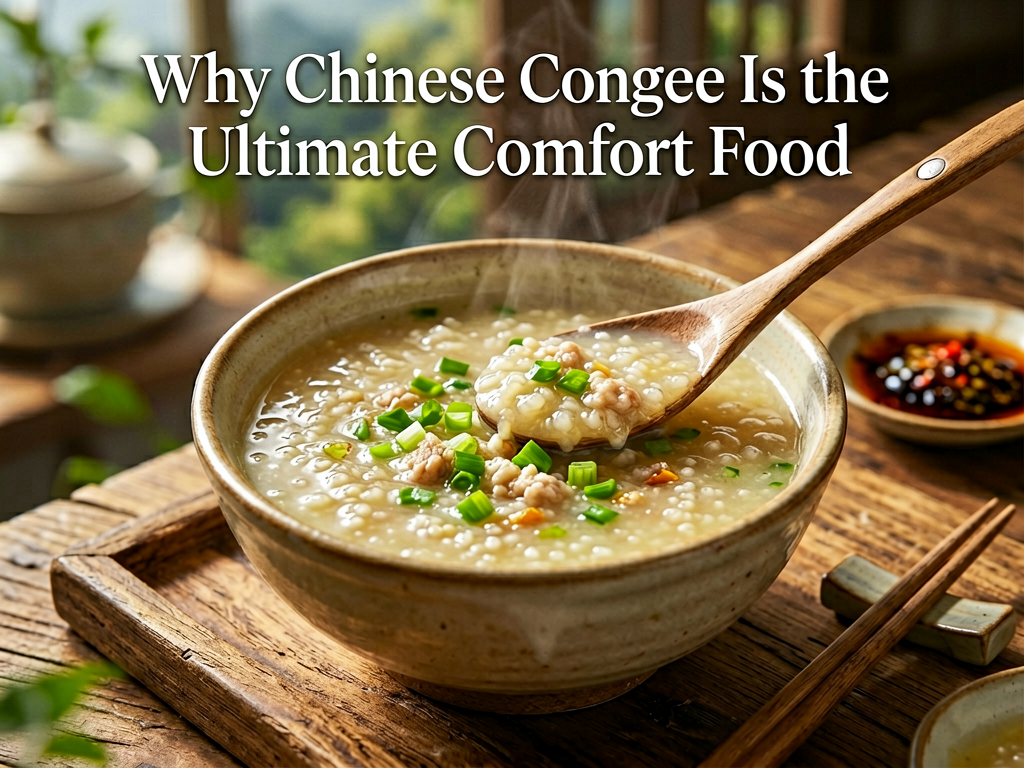
It was congee. Just white rice, water, and maybe a pinch of salt, boiled until it broke down into a creamy, pale slurry. But that night, it tasted like heaven. It was warm, soothing, and somehow deeply satisfying in a way that a heavy steak dinner never could be.
That moment stuck with me. I’ve lived in China for eight years now, and I’ve traveled through provinces where congee is eaten for breakfast, lunch, dinner, and sometimes just because the mood strikes. People often ask me what the most iconic Chinese dish is. I don’t say Peking Duck. I don’t say Mapo Tofu.
I say congee. It’s the ultimate comfort food, and here’s why.
It’s the Original Fast Food
Let’s be honest about modern life. We’re all busy. You wake up late, you rush out the door, or you’re just too exhausted to cook after a long shift. In the West, “fast food” usually means something fried, greasy, and covered in sodium. In China, it means a bowl of rice porridge that you can buy for less than a dollar.
I remember walking through the streets of Shanghai in the early mornings. The air would still be cool and damp. Stalls would be popping up, steam rising from large metal pots. The vendors, usually grandmothers with quick hands, would ladle the hot rice into small bowls. Sometimes they’d add a slice of preserved egg or some pickled vegetables. Other times, it was just plain.
You could grab it and go. No utensils needed if you’re brave enough, though most places provide a spoon. It’s efficient. It’s cheap. And it’s hot. There’s something primal about eating something that’s literally hot from the pot. It warms you from the inside out. I’ve had congee in five-star hotels in Beijing, and I’ve had it on plastic stools in rural Hunan. Both were perfect.
The Texture That Melts Your Brain
If you’ve never had properly made congee, you might think it’s just watery rice. You’d be wrong. Good congee has a texture that’s almost impossible to describe unless you’ve tasted it. It’s creamy, thick, and silky. The rice grains have completely dissolved, releasing their starch to create a velvety base.
I remember the first time I tried a Cantonese-style congee with chicken and century egg. The contrast was incredible. You’d get a spoonful of the smooth, white rice, and then bite into a piece of tender chicken or the funky, creamy yolk of the century egg. It was like eating a savory pudding, but with substance.
It’s easier than you’d expect to make at home, too. You just need rice, water, and patience. The ratio is usually one part rice to eight or ten parts water. You simmer it for hours, stirring occasionally to prevent sticking. Some people use a rice cooker, which is a lazy hack I fully endorse. Others use a slow cooker. Whatever works.
The key is to let the rice break down. If you rush it, you’ll just have soup with rice in it. That’s not congee. That’s just bad soup. Real congee takes time. It’s a testament to the idea that the best things in life are worth waiting for. Sound interesting?
It’s a Blank Canvas for Flavor
One of the things I love most about Chinese congee is its versatility. It’s a blank canvas. It’s neutral enough to let other ingredients shine, but sturdy enough to hold them. In Guangdong, they load it up with fried dough sticks (youtiao), which you dip into the hot porridge. The crunch against the creaminess is divine.
In Sichuan, they might top it with chili oil, preserved vegetables, and shredded chicken. The spice cuts through the mildness of the rice. I had a bowl like this during a particularly rainy afternoon in Chongqing. The steam rose off the bowl, mixing with the fog outside. I ate it slowly, letting the heat build in my chest. It felt like a hug in a bowl.
You can add almost anything. Leftover roast duck? Chop it up and throw it in. Some spinach and ginger? Perfect. A fried egg on top? Yes, please. I’ve even seen sweet versions, made with red beans or lotus root, served as a dessert or a light breakfast. The possibilities are endless.
This flexibility is why it’s so popular. It’s a way to use up leftovers, but it transforms them into something new. It’s resourceful. It’s smart. And it’s delicious. I could be wrong, but I think this adaptability is what makes it a staple in every Chinese household.
The Healing Power of Simplicity
There’s a reason congee is the first thing people eat when they’re sick. In Chinese medicine, it’s considered easy to digest and gentle on the stomach. It provides energy without taxing the body. After a night of heavy drinking, after a day of eating spicy food, or when you’re just feeling under the weather, congee is the answer.
I learned this the hard way. During my first winter in Beijing, I caught a bad cold. My throat was sore, my nose was running, and I had zero appetite. My Chinese friend, Lin, showed up with a thermos of congee. She made it with millet and pumpkin, which is a classic combo for soothing the stomach.
I drank it slowly. It didn’t irritate my throat. It settled in my stomach like a warm blanket. By the next day, I felt a bit better. By the third day, I was back on my feet. It’s not magic, but it’s close. It’s nourishing in a way that feels restorative.
This isn’t just a cultural thing. It’s biological. Rice is easy to break down. It provides carbohydrates for energy without the fiber that might upset a sensitive gut. And when it’s cooked with herbs or meats, it adds nutrients. It’s functional food. It’s designed to heal.
More Than Just a Meal
Congee is also about connection. In many parts of China, congee is a communal dish. Families gather around a pot, sharing toppings and conversation. It’s not a solitary meal. It’s an event. I’ve spent rainy Sunday mornings in my friend’s apartment in Hangzhou, watching her make congee while we talked about life, work, and travel.
The smell of the rice boiling fills the apartment. It’s a cozy, domestic scent. It smells like home. In a country as vast and diverse as China, congee is a common thread. Whether you’re in the north, where it might be thicker and heartier, or in the south, where it’s lighter and more refined, the concept remains the same.
It’s a reminder that food isn’t just about fuel. It’s about comfort, tradition, and care. When someone makes you congee, they’re saying, “I care about you. I want you to feel better.” It’s a simple gesture, but it carries a lot of weight.
I’ve eaten congee on street corners, in restaurants, and in homes. I’ve eaten it with my hands, with spoons, and with chopsticks (don’t judge, it’s possible). I’ve eaten it when I was happy, sad, sick, and healthy. And through it all, it’s been a constant. A reliable friend. A warm hand in the cold.
So, the next time you’re feeling down, or just want something simple and satisfying, try congee. Make it yourself, or find a local spot. Don’t overcomplicate it. Let the rice do the work. And then, sit back, take a spoonful, and let the warmth spread through you. It’s not just a meal. It’s a moment of peace in a chaotic world. Trust me, you’ll thank me later.