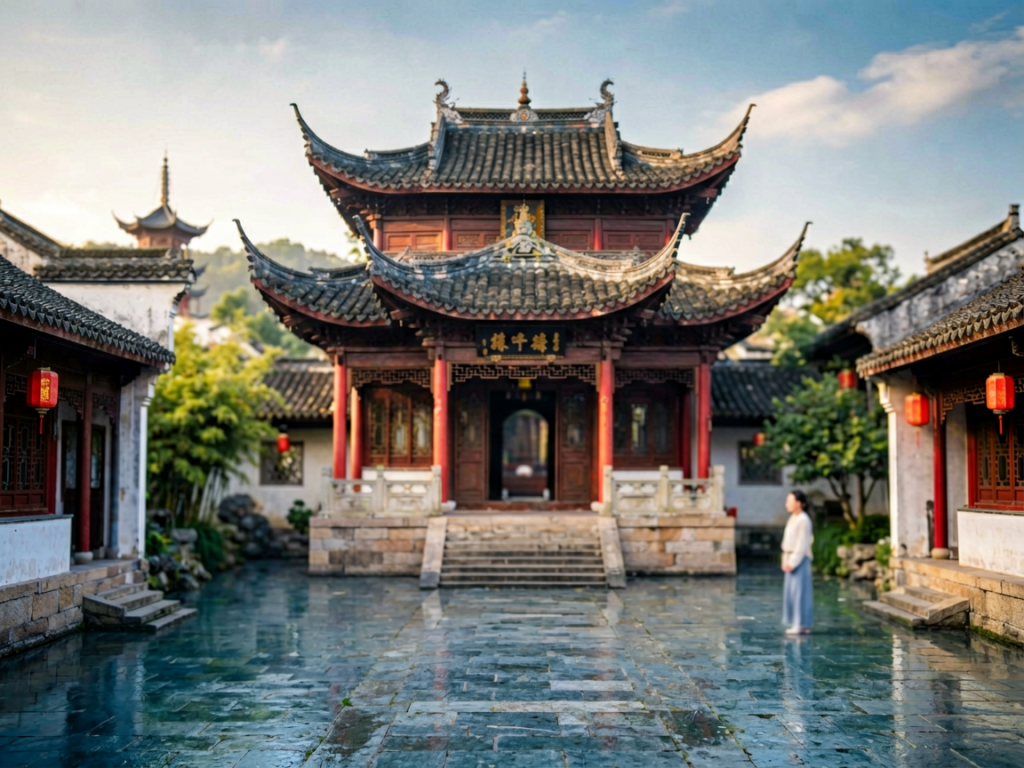
I used to think I knew what “chill” meant. I lived in Shanghai for three years. I survived the subway crush during rush hour. I navigated the endless neon of Nanjing Road. I thought I was tough. Then I went to Kunming.
Honestly, it broke me. Not in a bad way. It just made everything else feel like unnecessary noise. I remember sitting on a stone bench in Green Lake Park at 7 AM. The air was crisp. The sun was warm. Locals were playing chess. Some were singing opera. Others were just watching the ducks.
There was no rush. No one was checking their phone. No one was trying to sell me something. I sat there for two hours. I didn’t move. It was the most productive I’d felt in months.
If you’re planning a trip to China, your brain probably defaults to Beijing, Shanghai, or Xi’an. That’s fine. But if you want to see the real, unfiltered pulse of modern Chinese life, you need to head southwest. You need Kunming.
The Weather That Actually Makes Sense
Let’s talk about the weather first. I know, it sounds boring. But trust me, it changes everything. Kunming is called the “Spring City” for a reason. It’s not a marketing slogan. It’s a daily reality.
I’ve lived through freezing winters in Beijing. I’ve sweated through humid, sticky summers in Guangzhou. Kunming? It’s just right. All year round. You can wear a t-shirt in the morning and throw on a light jacket by sunset. That’s it.
I remember walking down Nanping Street last winter. It was December. Everyone else was bundled up in thick down coats. I was wearing jeans and a long-sleeve shirt. I felt like a local. I felt like I’d cracked the code.
Most big Chinese cities struggle with pollution or extreme temperatures. Kunming sits on a plateau. The air is clean. The sky is always blue. You can see the mountains from the city center. It’s rare to find a metropolis with over 8 million people that feels this open.
Does it rain? Sure. But it’s usually a quick, refreshing shower. Then the sun comes out. It keeps things fresh. It keeps the flowers blooming. Which brings me to the next point.
Flowers Are Just Part of the Furniture
In most cities, flowers are a luxury. You buy them for special occasions. In Kunming, flowers are Tuesday.
The Donghu Flower Market is massive. It’s basically a jungle of color. I went there one afternoon just to kill time. I ended up spending three hundred yuan on orchids, roses, and some weird purple thing I couldn’t name. The guy selling them didn’t even speak English. He just smiled and handed me my bags.
It’s not just the market. Look at the street corners. Look at the balconies. Every single apartment seems to have plants. Even in the concrete jungles of the new districts. Greenery isn’t an afterthought here. It’s a requirement.
I love that. It makes the city feel alive. It feels less like a machine and more like a garden that people happen to live in. It’s a vibe you can’t fake.
You can’t buy that kind of atmosphere in Beijing. You can’t buy it in Shenzhen. You have to find it. And Kunming has it in spades.
Eat Your Way Through the Plateau
Okay, let’s get to the good stuff. Food. Kunming’s food scene is wild. It’s not just Sichuan spice. It’s not just Cantonese dim sum. It’s something else entirely.
You have to try the Cross-Bridge Rice Noodles. I know, I know. It’s a cliché. But it’s a cliché because it’s good. The story behind it is legendary. A scholar’s wife would bring him hot soup and ingredients across a bridge so his food wouldn’t get cold. It’s romantic. It’s practical. It’s delicious.
But don’t just go to the tourist traps. Find a hole-in-the-wall spot. I found one near my apartment. The owner was a grumpy old man who didn’t care about my chopsticks skills. He just threw noodles in the bowl.
The broth was rich. The meat was tender. The chili oil was perfect. It wasn’t fiery hot. It was fragrant. It woke up my taste buds. I ate it twice a week for a month.
And that’s just the noodles. You have to try the wild mushrooms. In summer, the forests around Kunming explode with fungi. You can buy them in the market. You can eat them at restaurants. But be careful. You must cook them properly. Undercooked wild mushrooms can get you hallucinating. I heard stories from friends. I didn’t test it. I played it safe.
The flavor is hard to describe. Earthy. Umami. Like the forest itself. It’s unique to Yunnan. You won’t find this anywhere else in China. Not really.
I’m no chef. But I know good food when I eat it. Kunming feeds you well. And cheaply. You can get a full meal for less than five dollars. That’s insane for a capital city.
The Gateway to Adventure
Kunming isn’t just a destination. It’s a base camp. The rest of Yunnan province is incredible. And Kunming is the easiest place to start.
I took a high-speed train to Dali. It took four hours. The views were spectacular. Mountains, lakes, ancient towns. Dali is where the cool kids go. It’s bohemian. It’s artistic. It’s a short hop from Kunming.
Then there’s Lijiang. It’s more famous. It’s more crowded. But the architecture is stunning. The waterways are charming. You can spend days wandering its cobblestone streets. It feels like stepping back in time.
But my favorite trip was to the Stone Forest. It’s weird. It’s ancient. It’s limestone pillars jutting out of the ground like a petrified forest. It’s surreal. I went with a local guide. He told me stories about the Yi people. The indigenous group that lives there.
The hike was tough. My legs burned. But reaching the top? Worth it. The view looked like another planet. I stood there, panting, looking out at the jagged rocks. I felt small. I felt connected. It’s moments like that that stick with you.
Getting around is easy now. The high-speed rail network has connected these places seamlessly. You can hop on a train, see a different culture, and be back in Kunming for dinner. That’s the beauty of this region. Diversity is right outside your door.
It’s Not a Vacation. It’s a Lifestyle.
Here’s the thing. Kunming doesn’t feel like a tourist destination. It feels like a home. That’s rare.
Most Chinese cities are obsessed with growth. They’re building skyscrapers. They’re expanding highways. Kunming is doing that too. But there’s a rhythm here that’s slower. People take their time. They value leisure.
I’ve seen this in how they treat guests. Hospitality here is genuine. It’s not scripted. If you’re lost, someone will walk you there. If you’re hungry, someone will tell you where to eat. It’s warm. It’s inviting.
I’m not saying Kunming is perfect. The traffic can be bad. The nightlife isn’t as intense as Shanghai. You won’t find luxury malls on every corner. But that’s the point. It’s not trying to be Shanghai.
It’s being itself. It’s confident enough to just be. It doesn’t need to prove anything to the world.
I’ve traveled all over China. I’ve eaten street food in Chengdu. I’ve climbed the Great Wall. I’ve drunk tea in Hangzhou. Kunming is my favorite. Not because it’s the most exciting. But because it’s the most honest.
It shows you what life can be when you slow down. When you prioritize comfort over chaos. When you value beauty over speed.
So, skip the crowds. Skip the stress. Head to Kunming. Sit in the park. Eat some noodles. Watch the sunset. You might just find that you don’t want to leave.
And if you do leave? You’ll be planning your return trip. That’s how it works here. It gets in your head. It gets in your heart.
Trust me, you need this. You need the spring. You need the flavor. You need the chill.
See you there.