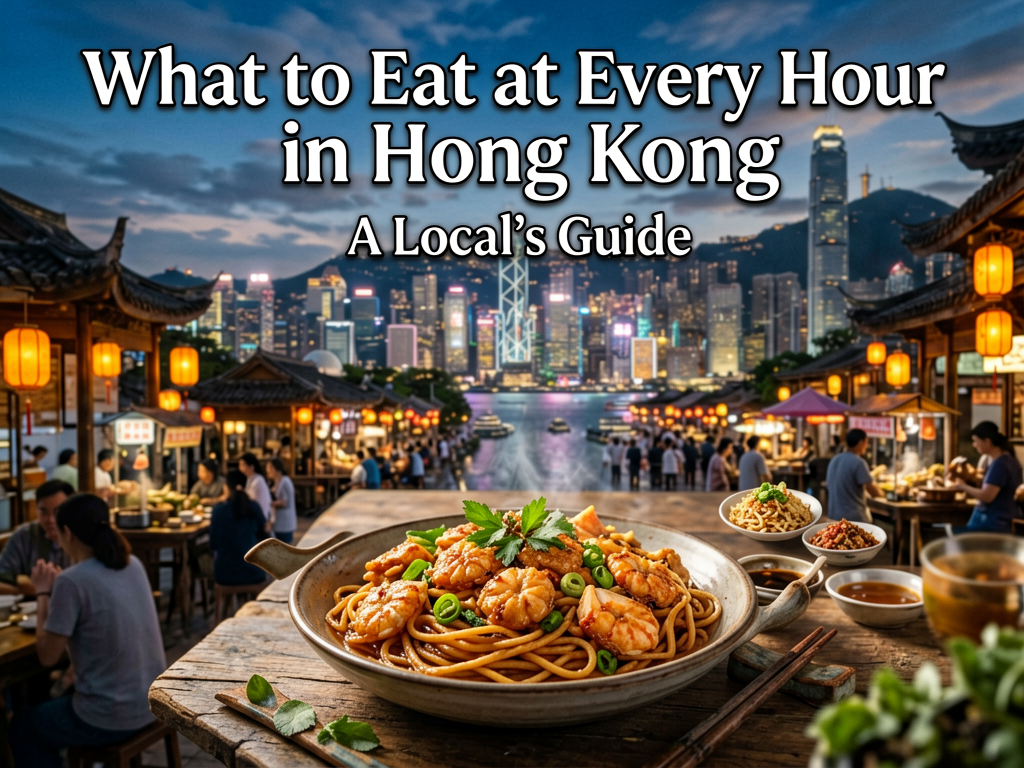
Look, I’ve lived in Hong Kong for eight years now. I’ve eaten my way through every corner of this city, from the neon-lit hawker centers in Mong Kok to the quiet, hidden cafes in Sheung Wan. And if there’s one thing I’ve learned, it’s that Hong Kong doesn’t sleep. Neither does its food scene. But trying to figure out what to eat at every hour in Hong Kong can feel overwhelming if you don’t know the rhythm of the place.
Most guidebooks give you a list of “must-visit” restaurants. They’re right, but they miss the point. The real magic isn’t in the Michelin stars. It’s in the timing. It’s about knowing that at 7 AM, you need congee. At 2 PM, you need a bowl of noodles that will stick to your ribs. And at midnight? You need something greasy, salty, and utterly perfect.
I’m not here to tell you to go to the fancy places. Well, not exclusively. I’m here to tell you how to eat like a local. How to sync your hunger with the city’s pulse. So, put away the app. Let’s talk about what to eat at every hour in Hong Kong.
The Dawn Patrol: Dim Sum Before the Heat Hits
Here’s the thing about Hong Kong morning: it starts early. Really early. If you want the best dim sum, you need to beat the crowds. I’m talking about 8 AM, maybe 8:30 if you’re brave enough to wake up before the sun fully crests over the skyscrapers.
I remember my first real dim sum experience. I was tired, jet-lagged, and confused. I wandered into a teahouse in Central, expecting something refined. Instead, I got chaos. Loud clattering of plates, tea pots pouring from heights, and aunties shouting order numbers. It was terrifying. But then I took a bite of a har gow (shrimp dumpling). It was translucent, bouncy, and tasted like the ocean.
That’s the hook. Once you taste it, you’re hooked. You don’t just eat dim sum; you hunt for it. Go to a traditional place. Avoid the tourist traps in Tsim Sha Tsui. Head to places like Lei Garden, if you want to splurge, or just any neighborhood spot in Kowloon.
You’ll want the siu mai. Pork and shrimp dumplings, steamed to perfection. Then the char siu bao. Those fluffy white buns with the sweet, barbecued pork inside. They’re warm, soft, and honestly, they’re better than most pastries I’ve had in New York or London. Don’t forget the egg tarts. Crispy, flaky crust. Custard filling that’s just sweet enough. It’s a breakfast that feels like a party.
And the tea? Order a pot of Tie Guan Yin or Pu-erh. It cuts through the richness of the food. It wakes you up without the jitters of coffee. Trust me, you’ll feel it. That slow, steady energy that carries you through the morning rush.
Lunch: The Noodle Rush and the Art of Speed
By noon, the city is a beast. People are rushing. Commuters are pouring out of MTR stations. Everyone is hungry, but no one has time for a long lunch. This is where the noodle shops shine. You need to find a place with a long queue. The longer the line, the better the noodles. It’s a rule.
I love the simplicity of a good bowl of beef noodle soup. But Hong Kong has its own twist. It’s not just beef. It’s often pork, or chicken. And the broth is key. It needs to be rich, dark, and simmered for hours. Look for shops that advertise “slow-cooked broth.” Even if they’re lying a bit, it usually means they care.
One of my favorite spots is a small shop in Yau Ma Tei. It’s tiny. You’re sitting elbow-to-elbow with strangers. The air smells of star anise and star fruit. I order the braised beef brisket noodles. The beef is so tender it falls apart. The noodles are chewy, handmade, and coated in that dark, savory sauce.
Sound interesting? It’s not just interesting. It’s essential. You eat fast. You slurp. You don’t talk. You just eat. It’s a meditative experience, honestly. For 15 minutes, the stress of the city fades away. You’re just you and your bowl.
If you’re not into noodles, try the wonton noodles. The wontons are shrimp-filled, floating in a clear, golden broth. The noodles are yellow, alkaline, and firm. It’s lighter than the beef, but just as satisfying. Pair it with some bok choy blanched in boiling water. A splash of soy sauce. Done.
The Afternoon Slump: Tea Houses and Sweet Treats
Two PM hits. You’re tired. The lunch rush is over. The city slows down, just for a moment. This is the time for dessert. Or tea. Or both. Hong Kong has a serious sweet tooth, and I’m here for it.
I used to think egg tarts were just a breakfast thing. Then I tried the mango sago pomelo. It’s a cold dessert. Mango cubes, sago pearls, and pomelo segments in a sweet, milky syrup. It’s refreshing. It’s cooling. It cuts through the humidity of the afternoon. I’ve had it dozens of times, and it never gets old.
Go to a dessert shop in Sham Shui Po or Mong Kok. These are the places where the locals go. They’re not fancy. The tables are sticky. The fans are whirring loudly. But the food is authentic. Try the almond tofu. It’s not actually tofu. It’s a delicate, jiggly almond custard. Serve it cold with syrup. It melts in your mouth.
And the tea houses? They’re everywhere. You can sit for hours. Order a pot of oolong. Order some pineapple buns. The buns are buttery, sweet, and often served with a slab of cold butter on the side. You tear it open, put the butter in, and let it melt. It’s simple. It’s indulgent. It’s exactly what you need to get through the afternoon.
I’m no expert on tea culture, but I know what tastes good. And a good cup of tea with a pineapple bun is a match made in heaven. It’s not just food. It’s a pause button. A moment to breathe. To watch the world go by. To recharge.
Dinner: The Hawker Center Feast
Evening comes. The heat breaks. The lights come on. And the hawker centers come alive. This is the heart of Hong Kong dining. No reservations. No menus. Just stalls, steam, and noise.
I love the energy of a hawker center. It’s democratic. A CEO sits next to a construction worker. They’re all eating the same roast goose. They’re all sharing the same tables. There’s no pretense. Just good food.
Go to Temple Street Night Market or any major hawker center in Kowloon. Start with the roast meat. Char siu (barbecued pork), roast goose, white cut chicken. The char siu is sweet and sticky. The goose is crispy on the outside, juicy on the inside. The chicken is simple, but the skin is gelatinous and rich. Dip it in ginger and scallion sauce. It’s incredible.
Then move on to the street food. Chicken rice. The rice is cooked in chicken broth and lard. It’s oily, but in a good way. Flavorful. The chicken is poached until tender. Serve it with chili sauce. It’s a classic for a reason.
And the clams? Steamed clams with black bean sauce. They’re briny, savory, and perfect for sharing. Or the oyster omelet. Crispy edges, soft inside, topped with sweet sauce. It’s heavy, but you don’t care. It’s dinner. It’s comfort.
I could be wrong, but I think this is the best meal of the day. It’s communal. It’s loud. It’s delicious. You leave feeling full, happy, and ready for the night.
The Midnight Oil: Congee and Noodles for the Night Owls
Midnight. You’re out. You’ve been drinking, or you’ve been working, or you’ve just been exploring. Your stomach growls. Most places are closed. But not in Hong Kong. This is when the late-night stalls open up.
I love the late-night congee shops. They’re warm, quiet, and welcoming. The congee is thick, creamy, and savory. Topped with century egg, pork floss, and scallions. It’s soothing. It’s easy on the stomach. It’s perfect after a night of drinking.
Or go for the late-night noodles. Wonton noodles, beef noodles, rice noodles. They’re cheap, fast, and hot. I remember a night in Lan Kwai Fong. I was tired, broke, and hungry. I found a small stall selling claypot rice. It was crispy on the bottom, savory on top. It cost me $40 HKD. It was the best meal I’d had all week.
There’s a certain romance to eating alone at midnight in Hong Kong. The streets are empty. The neon lights reflect on the wet pavement. You’re the only one awake. And you’re eating the best food of the day.
This is what to eat at every hour in Hong Kong. It’s not a rigid schedule. It’s a flow. It’s about listening to your body and the city. Start with dim sum. Rush through noodles. Slow down for tea. Feast at the hawker center. End with congee.
You’ll find that Hong Kong feeds you in more ways than one. It’s not just about the calories. It’s about the culture. The history. The people. Every bite tells a story. So eat. Explore. Enjoy. And don’t forget to save room for dessert.