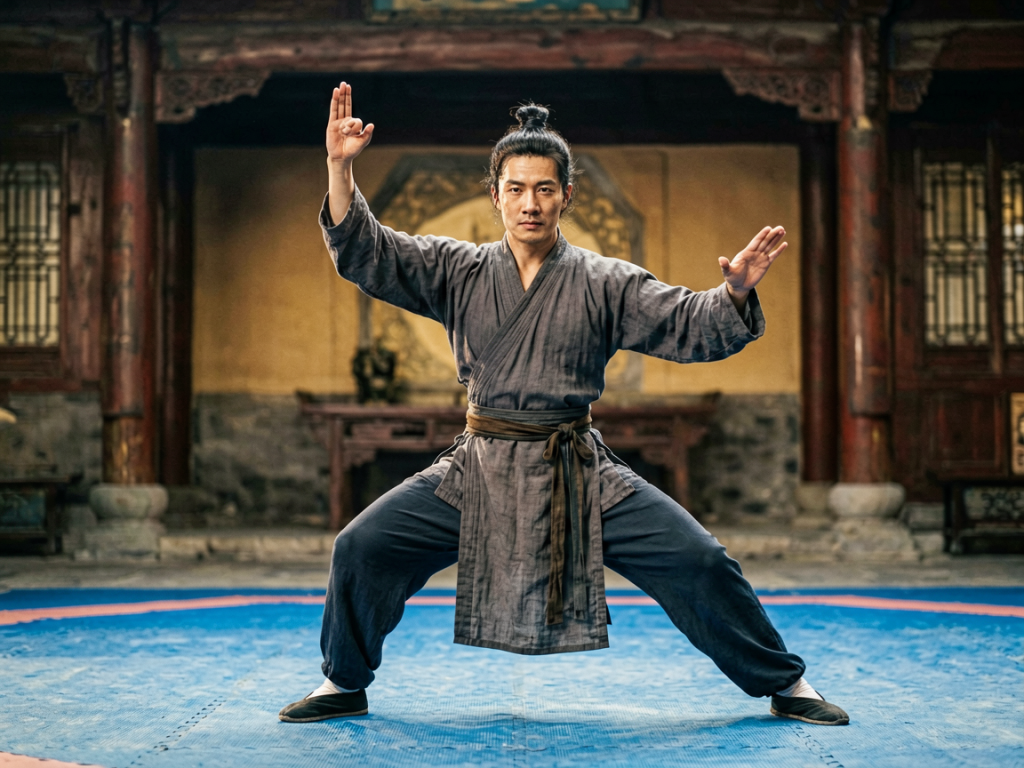
I’ll be honest, I was skeptical when I first heard the claim. You sit in a dojo in Tokyo, or a gym in New York, practicing moves that feel distinctly local. The uniforms, the language, the specific rituals–it all feels like it belongs to that culture. But then you start pulling at the threads. And pretty soon, you realize that a lot of what we consider “traditional” martial arts actually has deep, tangled roots in Chinese soil.
I’m not saying every punch you throw traces back to a Shaolin monk. That’s a bit of a stretch. But the foundational concepts? The philosophy of movement? The way we train the body and mind together? Yeah, that’s almost certainly Chinese DNA. I’ve lived in China for eight years now, and I’ve seen this play out in the most unexpected ways.
The Myth of the Lone Inventor
We love a good origin story. We want to believe that Judo was invented by Jigoro Kano in a vacuum, or that Karate emerged fully formed in Okinawa. It’s a nice narrative. It’s clean. But history is rarely clean.
When I first started training in Chinese martial arts, I expected to find rigid dogma. Instead, I found a chaotic, vibrant marketplace of ideas. It turns out that for centuries, China was the hub of combat exchange. Merchants traveled the Silk Road. Monks wandered between provinces. Soldiers were stationed everywhere. And with them, they brought techniques.
I remember sitting in a small tea house in Chengdu, watching an old man practice Tai Chi. He wasn’t flashy. He wasn’t loud. But his movements were fluid, heavy, and incredibly efficient. A local student asked me why he moved like that. I shrugged. I didn’t have the vocabulary to explain that this specific type of softness had influenced internal power concepts across Asia.
Sound interesting? It gets better. The idea that you can generate power from relaxation, rather than just muscle tension, is a concept that didn’t just appear in China. It spread. It evolved. But the seed? That was definitely Chinese.
Shaolin Isn’t Just Movies
Let’s talk about Shaolin. Everyone knows the name. Most people think of the movies. The high kicks, the impossible jumps, the monks who can break bricks with their bare hands.
I went to Dengfeng to see the real Shaolin Temple. I wanted to see the magic. What I found was far more interesting. It was a living, breathing institution that has been refining combat techniques for over fifteen hundred years. Yes, the movies exaggerate. But they’re exaggerating on a foundation of real history.
I spent an afternoon watching a group of younger monks train. They weren’t doing Hollywood stunts. They were drilling basics. Hundreds of repetitions of the same punch. The same stance. The same kick. It was boring, actually. But there was a precision there that you don’t see in many modern gyms. They were building a library of movement.
And that’s the key. Chinese martial arts didn’t just create styles. They created a methodology. A way to analyze conflict, break it down, and rebuild it into a system. That methodology traveled. It went to Japan. It went to Korea. It went to Okinawa.
Take Karate, for example. Okinawa is right next to Fujian province in China. The cultural exchange was constant. The local Okinawan fighting style, Te, mixed with Chinese Boxing from Fujian. The result? Karate. It’s not a coincidence. It’s a historical fact. You can’t separate the two without ignoring half the story.
The Philosophy of Yin and Yang
Here’s the thing that really blew me away. It wasn’t the physical techniques. It was the mindset. Chinese martial arts are steeped in Taoist and Confucian philosophy. They don’t just teach you how to hit someone. They teach you how to be in the world.
I struggled with this at first. I’m an American. I like things black and white. Attack or defend. Win or lose. But Chinese martial arts operate in the gray. They talk about yielding to overcome hardness. They talk about using an opponent’s energy against them.
I tried to explain this to a friend who practiced Boxing. He looked at me like I was speaking another language. “You just punch him,” he said. “Why do you need to yield?”
I couldn’t explain it well. Not then. But now? I get it. It’s not about being passive. It’s about being smart. It’s about conservation. It’s about efficiency. It’s about understanding that force meets force, and you get a collision. But force meets redirection, and you get control.
This concept of Yin and Yang–the interplay of opposites–is central to almost every Chinese martial art. And it’s a concept that has permeated global combat culture. Even Western fencing talks about line and counter-line. Even Brazilian Jiu-Jitsu talks about leverage and position. These aren’t separate ideas. They’re variations on a theme that started in China.
I love this because it makes martial arts more than just fighting. It makes them a way of thinking. When you learn to move with the flow, you start moving through life differently. You’re less reactive. More responsive. It’s a subtle shift, but it’s profound.
The Diaspora of Styles
China is huge. It’s diverse. And its martial arts reflect that. You have the long boxing of the North, with its high kicks and long ranges. You have the short boxing of the South, with its close-quarters traps and powerful stances.
When Chinese immigrants left China in the 19th and 20th centuries, they brought these styles with them. They settled in Southeast Asia. They settled in the West. And they taught their local students.
I met a Wing Chun master in London who was the fifth-generation student of a man who had learned from a refugee in Macau. The lineage was clear. The technique was pure. But the context had changed. He was teaching it in a cold, rainy city, far from the humid villages of Guangdong.
But the core remained. The centerline theory. The structure. The economy of motion. It traveled. It adapted. But it didn’t lose its identity. That’s the power of the Chinese root. It’s resilient. It’s adaptable. But it’s also deeply rooted.
I’ve seen this happen with Kung Fu in America, too. In the nineties, there was a Kung Fu craze. People flocked to dojos. But a lot of it was performance. Flash over substance. But underneath that, the real stuff was still there. The teachers who had trained in China were passing on the real techniques. The real philosophy.
It’s like a river. The surface changes. The banks shift. But the water? The water flows from the same source.
Modern Martial Arts: A Chinese Foundation?
Let’s talk about MMA. Mixed Martial Arts. It’s the modern battlefield. It’s brutal. It’s efficient. It’s stripped down to the essentials. And yet, even here, you see Chinese influence.
Think about the clinch. Think about the sweeps. Think about the way fighters use their hips and structure to control their opponents. These aren’t just Western concepts. These are concepts that have been refined in Chinese wrestling styles like Shuai Jiao for millennia.
I watched a fight recently where a fighter used a hip toss that looked exactly like a move I’d seen in a Shaolin temple years ago. It was fast. It was clean. It was devastating. And I smiled. Because I knew where it came from.
It’s not that MMA is Chinese. It’s that it’s global. And Chinese martial arts are a huge part of that global fabric. They provided the tools. They provided the philosophy. They provided the framework.
Even the modern sports science behind martial arts–kinetic linking, structural alignment, breath control–has roots in Chinese training methods. They figured it out centuries ago. They just didn’t have the cameras to prove it.
Why This Matters Now
So why does this matter? Why should you care about the roots of your martial art?
Because it changes how you train. When you understand the history, you understand the purpose. You’re not just memorizing moves. You’re inheriting a tradition. You’re connecting with a lineage that stretches back centuries.
It adds depth. It adds respect. It adds meaning.
I’ve seen students who learn this context train harder. They train with more intention. They’re not just going through the motions. They’re honoring the past. They’re building the future.
And it’s not just about martial arts. It’s about culture. It’s about understanding that we’re all connected. That ideas travel. That techniques evolve. That we’re all part of a larger story.
I love traveling. I love learning new things. But there’s nothing quite like realizing that the thing you thought was unique is actually part of a global conversation. A conversation that started in China.
Next time you step onto the mat, or into the ring, or onto the street, think about that. Think about the roots. Think about the tradition. And then, go hit something. Responsibly. And with great respect for the history behind your moves.
It’s a beautiful thing, really. To know that your fists carry the weight of history. That your kicks are grounded in philosophy. That your spirit is part of a long, unbroken chain.
That’s not just martial arts. That’s culture. That’s life. And it’s all Chinese at its core.