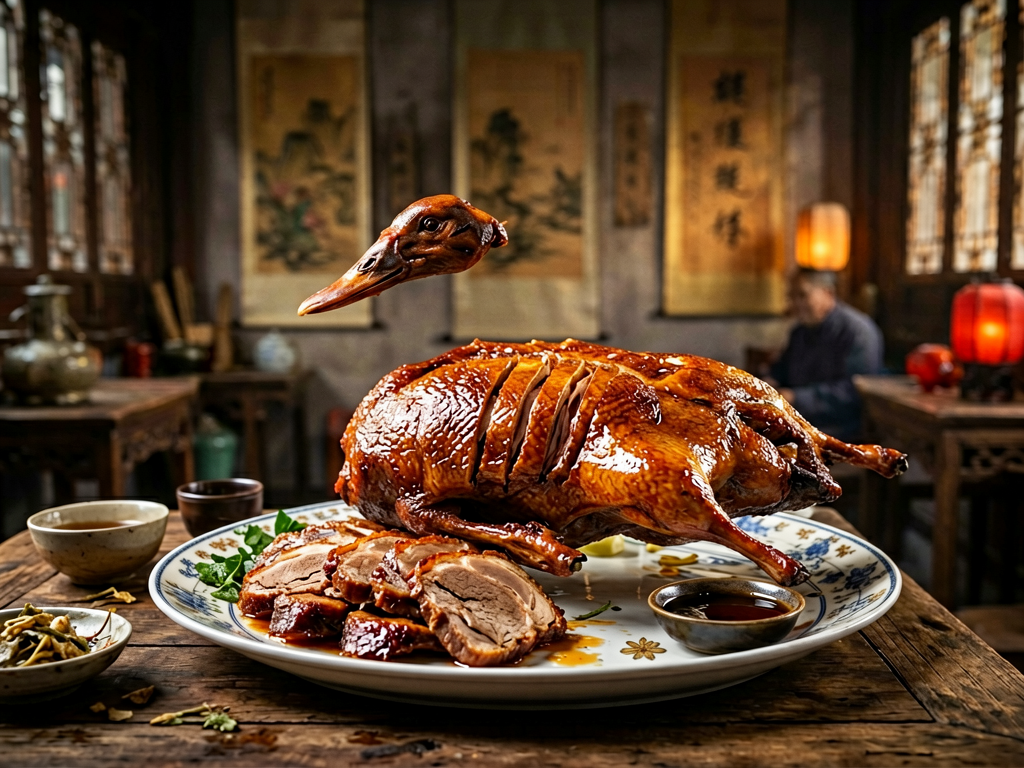
The Crackling Sound That Changed Dinner
I remember the first time I heard it. It was a rainy Tuesday night in Beijing, and I was sitting in a booth at Quanjude. The air smelled of coal smoke and star anise. Then, the chef walked in. He didn’t shout. He didn’t make a fuss. He just raised the knife.
*Chop.*
The sound wasn’t a thud. It was a crisp, sharp crackle that cut through the ambient chatter of the restaurant. It was the sound of skin so thin and so brittle it shattered like glass. At that moment, I realized I wasn’t just looking at dinner. I was looking at a miracle of physics and patience.
Most people think Peking Duck is famous because it’s delicious. And sure, it is. It’s probably the best thing you’ll ever put in your mouth. But that’s not the whole story. If it were just about taste, we’d have a dozen other regional dishes fighting for the title.
The real reason Peking Duck holds this throne isn’t just flavor. It’s the sheer, audacious effort it takes to make it right. It’s a dish that refuses to be rushed. It’s a dish that demands your respect before you even take the first bite.
A History Written in Smoke and Sugar
Let’s talk about where this beast came from. You can’t understand the duck without understanding the emperors. This dish didn’t start in a street stall. It started in the imperial kitchens of the Ming Dynasty. We’re talking 1400s. Back then, it was called “Roasted White Duck.”
The emperors loved it so much they moved the capital to Beijing specifically to keep the chefs close. When the Qing Dynasty took over, they took the recipe and refined it even further. They introduced the open-flame roasting method using fruitwood. That’s a key detail. Most modern roasts use gas or electric ovens. Traditional Peking Duck uses jujube wood, pear wood, or peach wood.
Why does the wood matter? Because fruitwood burns clean and slow. It imparts a subtle sweetness that cuts through the rich fat of the duck. It’s not smoky like BBQ. It’s floral and faint. It’s sophisticated.
For centuries, this dish was a privilege of the elite. You couldn’t just walk in and order it. You had to be invited. You had to be someone. That exclusivity created a halo effect that still lingers today. When you eat Peking Duck now, you’re tasting a piece of imperial history. You’re tasting centuries of chefs trying to outdo each other.
I once asked a chef in a small, family-run spot in the hutongs why he still used the old hanging oven method. He looked at me like I’d asked him why he didn’t eat with his hands. “The gas oven,” he said, waving a hand dismissively, “it’s lazy. The duck doesn’t know it’s being treated with respect.”
That’s the thing. You can’t fake that respect. The duck has to be pumped with air to separate the skin from the fat. Then it’s scalded. Then it’s glazed with maltose syrup. Then it’s hung in a drafty room to dry for hours. If you skip a step, the skin won’t crisp. It’ll just get chewy. And nobody wants chewy duck.
The Anatomy of a Perfect Duck
Let’s get technical for a second. I know, I know. But hear me out. The structure of the dish is what makes it iconic. It’s not just a plate of meat. It’s an assembly.
First, the skin. This is the star. It should be translucent, amber-colored, and utterly brittle. You don’t even need to chew it. You just let it melt on your tongue. It’s salty, sweet, and fatty in the most perfect balance.
Then, the meat. It’s leaner than you’d expect. The pumping process ensures that the fat renders out during the roasting, leaving the meat tender but not greasy. It’s juicy, yes, but it’s not swimming in oil.
And then, the pancakes. Thin, steamed wheat wrappers. They’re neutral. They’re there to carry the load. You spread a thin layer of hoisin sauce–or sweet bean sauce, depending on your region–on the pancake. You lay down a few strips of skin and meat. Then comes the scallion. Not the whole onion. Just the white parts, cut into fine julienne strips.
The crunch of the scallion is essential. It provides a textural contrast that keeps the dish from feeling heavy. Without it, you’d be eating a lot of soft, fatty carbs. The scallion cuts the richness like a knife.
And if you’re in Beijing, you might see cucumber strips too. I’m not a huge fan of the cucumber. I think it’s a bit too watery. But some people love it. I’m no expert, but I stick to the scallions. They’re sharper. They punch harder.
The ritual is part of the experience. You have to assemble it yourself. It slows you down. It forces you to pay attention. You can’t wolf it down like a burger. You have to construct each bite. It’s interactive. It’s playful. It’s why families love it. It’s a shared activity.
The Two Schools of Thought
Here’s where it gets spicy. Well, spicy in a culinary debate sense, not a chili pepper sense. There are two main camps when it comes to Peking Duck. You’ve got the hanging oven style and the closed oven style.
Quanjude is famous for the hanging oven. The ducks are hung on hooks inside a closed brick oven. The heat circulates around them. It’s traditional. It’s historic. The skin is incredibly crispy.
Then you have Bianyifang. They use a smokeless flat oven. The ducks are placed on the floor of the oven, not hung. The heat comes from the bottom and sides. The result? The meat is juicier. The skin is crispy, but slightly softer than Quanjude’s.
I’ve eaten at both. I’ve eaten at dozens of places. I’m going to be honest with you. The difference is subtle. But if you’re a purist, you’ll know.
I prefer Quanjude for the skin. I want that shatter. But if I’m hungry and I want more meat, I’ll go for Bianyifang. It’s a matter of mood. Some days I want the ritual. Other days I just want to eat.
The marketing wars between these two brands have been going on for decades. It’s like Coke vs. Pepsi, but with more wood smoke. Each side claims their method is superior. Each side has loyal followers. I don’t care who wins. I just care that the duck is good.
Why It’s Still King in 2024
You might wonder why we’re still talking about a dish from the 1400s. Why hasn’t it been replaced by something trendier? Why isn’t everyone eating hot pot or dumplings?
It’s because Peking Duck is timeless. It’s not a fad. It’s a staple. It’s the dish you order when you want to impress someone. It’s the dish you order for birthdays. It’s the dish you order when you want to feel like royalty.
In a world of fast food and instant gratification, Peking Duck is a reminder that some things take time. You can’t rush it. You can’t speed it up. You have to wait for the wood to burn down. You have to wait for the syrup to set. You have to wait for the chef to slice it.
That patience is rare. And we crave it.
I’ve seen tourists fly in just for a meal. I’ve seen locals drive an hour out of the city on a Sunday afternoon. It’s worth it. It’s always worth it.
The presentation matters too. When the waiter brings out the whole duck, steaming and glistening, it’s a spectacle. The slicing is a performance. The chef slices the duck tableside. He presents the skin first. Then the meat. Then the bones. He hands you the head and the tail as a sign of good luck.
It’s theatrical. It’s engaging. It makes you feel special.
And let’s not forget the leftovers. The bones can be boiled into a soup. It’s a light, clear broth with noodles and tofu. It’s the perfect way to end the meal. It’s comforting. It’s light. It balances the heaviness of the duck.
My Verdict: Worth the Hype?
Look, I’m not going to sit here and tell you that every duck you eat in China is perfect. I’ve had bad ones. I’ve had dry ones. I’ve had rubbery skin that made me want to cry. But those are the exceptions.
The real reason Peking Duck is famous is because when it’s done right, it’s unmatched. No other dish combines history, technique, flavor, and ritual in such a perfect package.
It’s not just food. It’s culture. It’s art. It’s a conversation starter.
If you’re ever in Beijing, don’t skip it. Don’t just eat it. Experience it. Find a place with a hanging oven. Sit in the back. Watch the chef work. Listen for that crack.
You won’t regret it. I promise.
So, what’s your take? Have you had the best duck of your life? Or are you team dumplings? Let me know in the comments. I read them all. And yes, I might even reply with a recipe. Or a recommendation. Or just a complaint about the weather.