Forget the Terracotta Warriors, Let’s Talk Noodles
You’ve probably heard that Xi’an is the starting point of the Silk Road. That’s true. It’s also the capital of Shaanxi province and, in my opinion, the culinary heart of China. I’ve spent eight years eating my way through this country, and I can tell you this: Xi’an isn’t just a destination. It’s a lifestyle built on carbs, chili oil, and garlic.
Most people fly in, stare at the Terracotta Warriors for an hour, and rush to the next city. That’s a mistake. You’re ignoring the real history, which is written on every street corner in bowls of steaming noodles and grilled skewers.
The city feels different here. The air smells like cumin and roasted lamb. The people speak with a thick, rapid dialect that sounds almost like shouting, but it’s just passion. And the food? It’s heavy, salty, and incredibly satisfying.
If you’re looking for light salads and delicate flavors, go to Shanghai. But if you want to eat until you can’t move, stay in Xi’an. I’m going to walk you through twelve things you need to eat. Don’t bother taking notes. Just save your appetite.
The Holy Trinity: Roujiamo, Liangpi, and Paomo
Let’s start with the big three. You won’t leave Xi’an without eating these, and you’ll probably eat them every day.
First, there’s Roujiamo. It’s often called the Chinese hamburger, but that comparison does it a huge disservice. A standard hamburger is soft, greasy, and forgettable. Roujiamo is textural perfection.
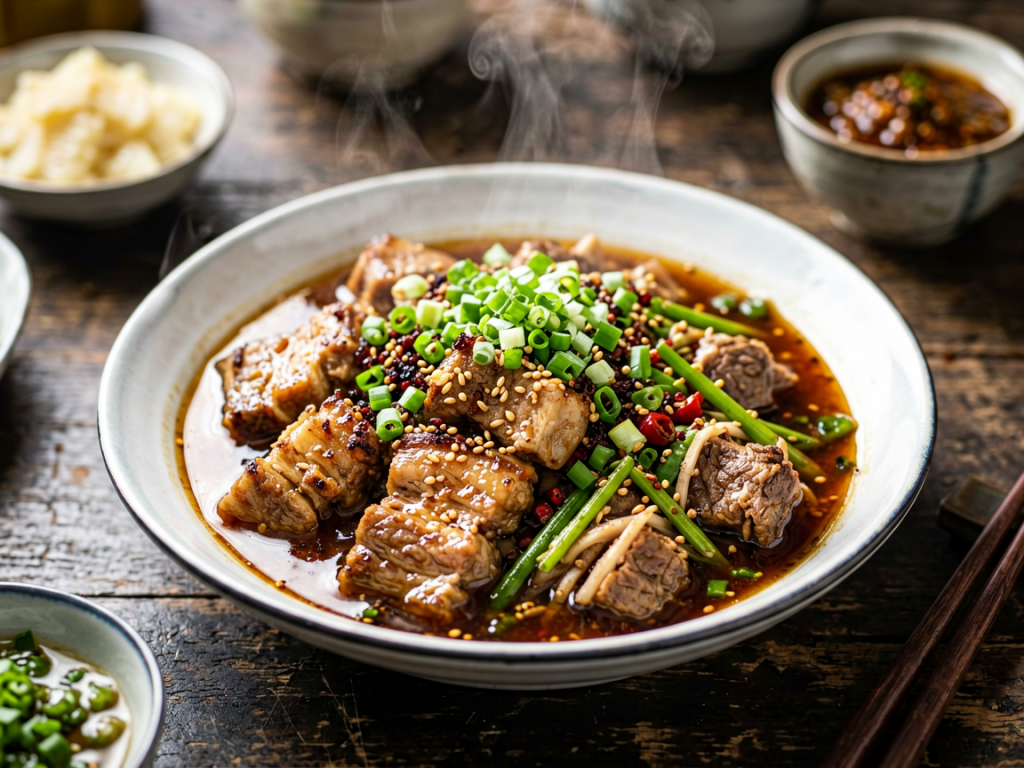
You walk up to a stall where an old man is slapping dough on a flat griddle. He takes a round piece of bread, slices it open, and stuffs it with slow-cooked pork belly. The meat is stewed for hours in a dark, aromatic broth with star anise and cinnamon.
The bread is crispy on the outside and soft on the inside. The meat falls apart in your mouth. I remember my first bite in the Muslim Quarter. I was standing next to a local student who handed me a paper plate. We both ate it in three bites. It was messy, hot, and perfect.
Next is Liangpi. This is cold skin noodles. It sounds unappealing to some, but trust me. The noodles are made from rice or wheat starch, giving them a chewy, slippery texture.
They’re served with vinegar, chili oil, garlic water, and peanuts. It’s refreshing, especially in the summer heat. The vinegar cuts through the spice, and the noodles have a slight bounce that keeps you coming back.
Then there’s Paomo. This is the interactive dish. You’re given a round, unleavened bread and told to break it into small pieces. Your choice of size, but don’t be too clever. If your pieces are too big, the chef will look at you with pity.
They take your crumbs, add lamb or beef, and pour hot broth over it. Then it’s cooked in a wok until the bread absorbs all the flavor. It’s essentially a delicious soup sandwich. I’ve seen foreigners struggle with the breaking part, but it’s therapeutic. Plus, you get a drink with your meal.
Get Lost in the Muslim Quarter
You can’t talk about Xi’an without mentioning the Muslim Quarter. It’s a maze of narrow alleys filled with the smell of roasting meat and fried dough. It’s chaotic, loud, and exactly where you want to be.
Forget the main street where the tourists crowd. Go deeper. Turn left when you see the big mosque, then right when the alley narrows. That’s where the locals eat.
One of my favorite spots here is a tiny stall selling Yangrou Chuan. These are lamb skewers. They’re not like the sweet BBQ skewers you might know from Beijing. These are dry-spiced.
The chef marinates the lamb with cumin, chili powder, and fenugreek. Then he grills it over charcoal. The fat drips down, causing flames to lick up the meat. It smokes everything in a two-block radius.
The meat is tender but has a slight chew. The cumin flavor is strong and earthy. It pairs perfectly with a cold beer or a glass of sour plum juice. I’ve eaten these skewers for breakfast, lunch, and dinner during my first month in Xi’an. I never got tired of them.
Another must-try here is Bawang Clam. Despite the name, it’s not just clams. It’s a spicy, stir-fried dish with glass noodles, bean sprouts, and a heavy dose of chili oil. It’s messy to eat, but the flavors are bold. The clams are small but full of briny sweetness. The spice hits you after a few bites, warming you up from the inside.
I tried this with a group of Chinese friends. They were laughing at my attempt to pick out the tiny bones. I was sweating, but I couldn’t stop eating. That’s the Xi’an way. You suffer through the spice, then you reward yourself with more food.
Sweet Treats and Breakfast Staples
Not everything in Xi’an is salty or spicy. The city has a sweet side that you need to explore.
Start with Bingfen. This is a cold dessert made from mung beans or jellyfish, served in a cup with brown sugar syrup, dried fruits, and sometimes hawthorn slices. It’s refreshing and slightly sweet.
I usually grab a cup of Bingfen after a heavy meal. It helps cut the grease. The texture is smooth and slippery. It’s like eating a cold pudding, but lighter. In the winter, there’s a hot version with ginger syrup, but the cold version is better for the spice.
Then there’s Youyou. These are fried dough twists, similar to Chinese doughnuts. But they’re not sweet. They’re salty and crispy. Some places serve them with a savory soup, while others are just eaten as a snack.
I like them best when they’re fresh out of the fryer. The outside is crunchy, and the inside is soft and airy. They’re cheap, usually costing less than a dollar. You can buy a whole bag and share them with strangers. It’s a great way to make friends in Xi’an.
For breakfast, look for Huimian. This is a thick, hand-pulled noodle soup. The noodles are wide and chewy. The broth is made from beef bones and simmered for days. It’s rich and comforting.
I’ve had Huimian at 6 AM in the freezing cold. The steam rising from the bowl felt like a hug. You add your own chili oil and garlic to taste. It’s the ultimate comfort food. I’ve tried noodle soups in other parts of China, but none compare to the depth of flavor in Xi’an’s version.
Don’t Ignore the Snacks
There are smaller snacks that define the city’s palate. One of them is Dingdang Hao. These are fried dough balls stuffed with sweet red bean paste or sesame. They’re crispy on the outside and soft on the inside.
I used to think they looked like simple fried dough. But the texture is unique. It’s light and airy, not dense like a bagel. The sweetness is subtle, not overwhelming. They’re great for a quick breakfast or an afternoon snack.
Another snack is Roujiamo de vegetarian version. Instead of pork, they stuff it with pickled vegetables or tofu. It’s a lighter option, but still packed with flavor. The pickled vegetables are sour and crunchy, adding a nice contrast to the soft bread.
I tried this when I was feeling a bit heavy from all the meat. It was refreshing and satisfying. You don’t need meat to have a great Roujiamo. The bread itself is the star.
Finally, don’t leave without trying the local beer. Xi’an has its own brand, Shaanxi Beer. It’s light and crisp. It pairs well with the spicy food. I’ve had many nights ending with a few beers and a plate of skewers. It’s the perfect end to a day of exploring.
My Final Thoughts on Eating in Xi’an
Eating in Xi’an isn’t just about filling your stomach. It’s about experiencing the culture. The food is loud, bold, and unapologetic. It reflects the people who live here.
I’ve seen tourists hesitate at the spicy dishes. They’re worried about their stomachs. But here’s the thing. Your stomach will adapt. The locals don’t eat this food because they’re used to it. They eat it because it makes them happy.
So, take the risk. Order the spicy noodles. Break the bread into small pieces. Eat the lamb skewers until your fingers smell like cumin. You won’t regret it.
Xi’an is a city that rewards the curious. The more you explore, the more you’ll discover. The food is just the beginning. But it’s the best way to start.
I still dream about that first Roujiamo. The crunch of the bread, the juiciness of the meat. It’s a memory I carry with me everywhere. I hope you get to experience it too.
Just remember to bring a map. And maybe some antacids. But mostly, just bring your appetite. The rest will take care of itself.