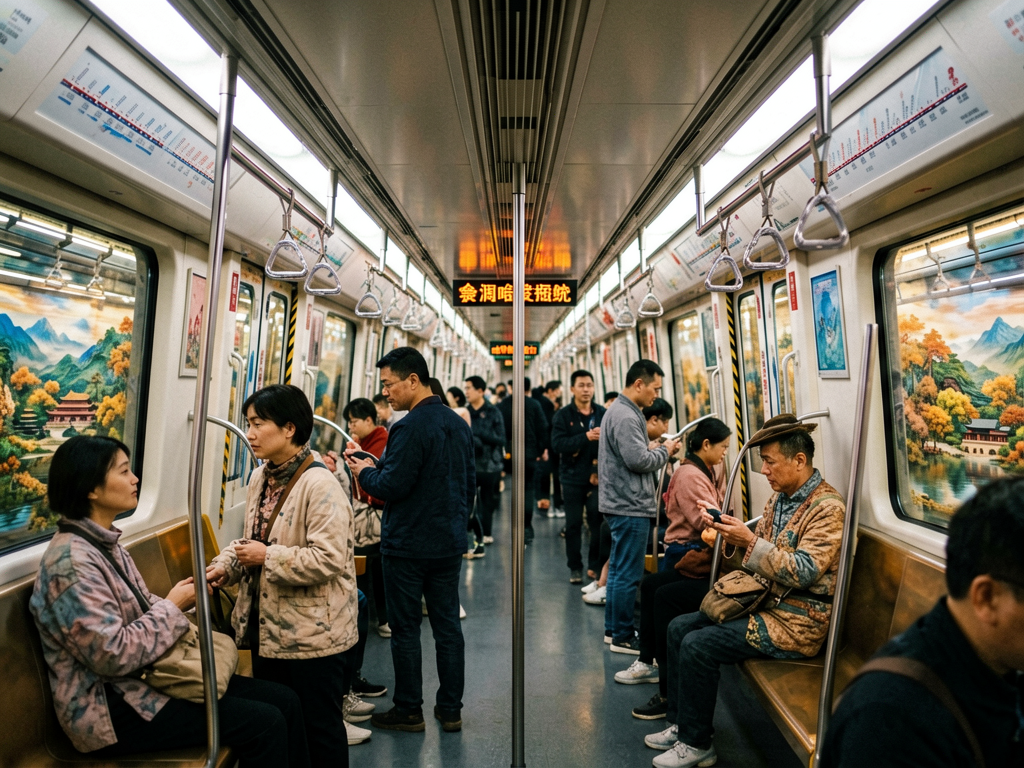
I still remember the first time I stepped onto Platform 2 at Xizhmen Station. It was 5:45 AM, and the air was thick with the smell of wet wool and stale breath. I was clutching my backpack like it contained nuclear codes, staring at a sea of heads moving in a synchronized, terrifying rhythm. I thought I’d made a mistake. I thought I’d missed a train. I thought I was going to die.
I didn’t die. I just got pushed. Hard.
That was eight years ago. Today, I glide through the labyrinthine tunnels of Beijing with the casual confidence of someone who owns a small apartment in Haidian. The Beijing Subway isn’t just a transit system; it’s a cultural phenomenon, a test of endurance, and honestly, one of the most efficient machines on earth. But if you try to approach it like a tourist in New York or London, you’ll get left behind. And not in a cool, cinematic way. In a “you’re standing on the wrong side of the yellow line while the train doors close” way.
So, let’s fix that. Let’s talk about how to survive, and actually enjoy, the underground veins of Beijing.
Forget the Card, Download the App
Here’s the thing: physical cards are dead. Or at least, they’re becoming ancient history. I still have a blue Beijing Subway card tucked away in a drawer somewhere, a relic from a simpler time when I had to fumble for coins and tap my plastic against readers. But now? I live by the app.
You need the Beijing Yikatong app, or better yet, the Alipay or WeChat mini-programs for subway transit. It’s seamless. You scan a QR code, you walk through the gate, you get off, and you’re done. No buying tickets, no finding a machine, no waiting in line. It’s faster than you’d expect, and it works everywhere. Even in those newer stations on Line 16 or the Daxing Airport Express, the QR code is king.
I tried using a physical card at a kiosk last week because I was being stubborn. The machine ate my card. It just took it and spat out a little receipt that said “Error 404.” I stood there, sweating, while a student in a thick down jacket sighed and tapped his phone. Lesson learned. Just set up the app before you land. It saves you from looking like a clueless foreigner, which is half the battle in China.
Timing is Everything (Especially the Bad Times)
Sound interesting? It should. Because if you’re riding the subway during rush hour, you’re not commuting; you’re participating in a high-intensity workout. The morning rush from 7:30 to 9:00 AM is brutal. The evening rush from 5:30 to 7:30 PM is even worse. During these windows, the trains are packed so tight that you can’t even take a step forward without someone else’s elbow digging into your ribs.
I learned this the hard way on Line 10, the loop line that circles the city. I was trying to get from Guomao to Sanlitun. By the time the train arrived, the doors were already sealed shut by the pressure of 300 bodies. I watched as a man literally folded himself into a car that was already at capacity. He didn’t get in. He just stood there, adjusting his tie, as the next train pulled up. That’s the Beijing standard. If you can’t fit, you wait.
But here’s the secret: avoid the rush if you can. If you work in the city, try to leave an hour earlier or later. It’s not always possible, but if you have even a tiny bit of flexibility, take it. The midday lull, between 11 AM and 2 PM, is a dream. You can actually sit down. You can read a book. You can look at your phone without apologizing to ten strangers for breathing too loudly.
And if you must ride during peak hours? Stand near the doors. It’s uncomfortable, sure, but it’s strategic. When the train hits the next station, you’re the first one off. That five-second advantage can mean the difference between catching your connecting bus and watching it drive away without you.
The Art of the Transfer
Beijing’s subway map looks like a plate of spaghetti that fell on the floor. Lines cross, they branch, they loop. Transfers are the real test of your mettle. Some are easy. Line 1 to Line 4 at Fuxingmen is a walk, sure, but it’s a walk with signs and escalators.
Others are marathons. Let’s talk about Guomao. If you’re transferring from Line 1 to Line 10 at Guomao, you’re in for a trek. I’m not joking. You exit the train, walk up three flights of stairs, cross a wide concourse, go down three flights, and walk past dozens of shops. It takes ten minutes. Ten. Minutes. To change lines.
I once spent twenty minutes trying to figure out why I was walking in circles. I asked a local woman, who looked at me with the weary patience of a saint, and pointed to a sign. “You’re going the wrong way,” she said. Simple. Direct. Helpful. That’s the Beijing subway experience. It’s chaotic, but it’s structured chaos. Follow the arrows. They’re color-coded. They’re everywhere. If you’re looking at the map in your head, you’re already lost.
Pro tip: If you’re transferring between major lines, try to do it at the first station after the junction. For example, if you’re going from Line 2 to Line 1, get off at Xizhmen or Fuxingmen. Don’t try to transfer deep in the city center unless you have to. The crowds thin out just a little bit as you move toward the edges.
Etiquette and the Silent Rules
Now, let’s talk about behavior. The Beijing subway has a set of unspoken rules that everyone follows, and breaking them is a social faux pas. First: no eating. I mean, seriously. No eating. I saw someone try to open a container of dumplings on Line 5 once. The silence that fell over the carriage was deafening. People stared. Not with anger, but with a kind of horrified disbelief. Put the dumplings away. Wait until you’re on the street.
Second: keep your voice down. We’re not talking about whispering, but don’t have loud phone conversations. I’ve heard people yelling at their bosses, their spouses, their dogs. It’s jarring. Keep your calls brief, or better yet, step off the train if you need to talk. It’s polite, and it makes the ride more bearable for everyone.
Third: give up your seat. The priority seats are for the elderly, pregnant women, and people with disabilities. I’ve seen young kids give up their seats for grandmas. It’s a beautiful thing. It’s not a competition. It’s just kindness. If you’re standing and an older person gets on, move. It’s that simple.
And finally: don’t block the doors. This is huge. When the train arrives, let people off first. Then, let people on. Do not try to squeeze in before the off-ramp is clear. I’ve seen grown men get into shoving matches over this. Don’t be that guy. Be the guy who lets the off-ramp clear, then walks in smoothly. You’ll get on faster, and you won’t have any enemies.
Specific Stations to Know
There are a few stations that are landmarks in their own right. Tian’anmen East is a beast. It’s huge, it’s confusing, and it’s packed. If you’re visiting the Forbidden City, get off here. But be prepared for a maze. The exits are numbered, but the signs can be tricky. Look for the exits that point to “Tian’anmen Square.” It’s the most reliable sign.
Then there’s Xidan. It’s the shopper’s paradise. If you want to buy clothes, electronics, or just people-watch, get off at Xidan. The station connects directly to the underground shopping malls. It’s clean, it’s modern, and it’s less stressful than the tourist traps. I love going there just to grab a bubble tea and watch the world go by.
And don’t forget the airport lines. The Daxing Airport Express is fast, sleek, and modern. It’s a world away from the older lines. If you’re arriving at Daxing, you’ll love it. If you’re going to Capital Airport, take the Line 10 to Line 2 to the Airport Express. It’s a bit of a journey, but it’s reliable. The trains are frequent, and the staff is helpful.
Why It’s Worth It
I could be wrong, but I think the subway is the best way to see Beijing. Sure, you can take a taxi. But you’ll be stuck in traffic. You’ll be paying extra. And you’ll miss the vibe. The subway is where the city lives. It’s where you see the students rushing to class, the workers heading home, the tourists looking confused.
I love the rhythm of it. The hum of the tracks, the announcement of the next station, the sudden burst of warmth when you step out of the cold. It’s a sensory experience. And once you get the hang of it, it’s incredibly freeing. You can go anywhere. From the ancient hutongs to the modern CBD, it’s all connected.
So, next time you’re in Beijing, don’t take a taxi if you don’t have to. Take the subway. Get lost a little. Ask for directions. Smile at the people who bump into you. You’ll find that the Beijing subway isn’t just a way to get around. It’s a way to live.
Trust me, you’ll feel like a pro before you know it. And hey, if you forget your app password? Just ask someone. Most people are happy to help, as long as you’re polite. Just don’t bring your dumplings.