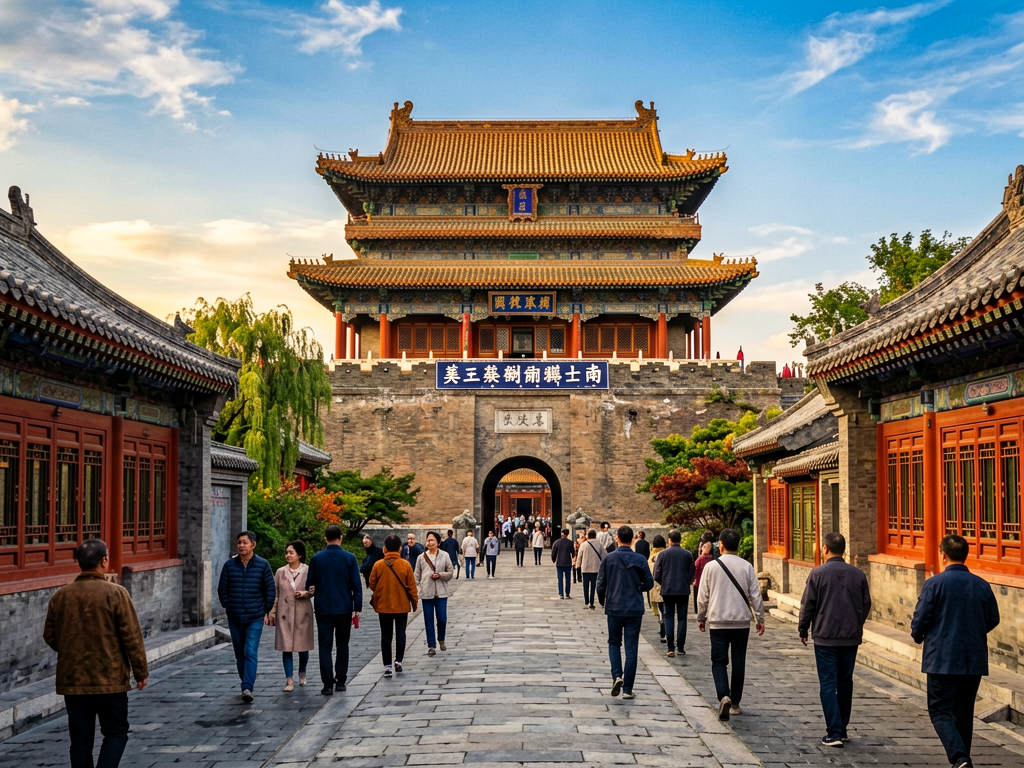
Forget the Temple of Heaven at Dawn
Here’s the thing about Beijing that guidebooks get wrong. They tell you to wake up at 5 AM to see the sunrise at the Temple of Heaven Park. And sure, it’s picturesque. There are hundreds of old men doing tai chi, drawing calligraphy with water on the pavement, and singing Peking opera in those high, piercing falsettos that give you goosebumps.
But it’s also a tourist trap in disguise. By 6:30 AM, the crowds are thick. You’re jostling for position with selfie sticks. The air smells less like history and more like exhaust fumes from the buses dropping off other tour groups. I’ve done it. I’ve stood there, shivering in the cold, waiting for a perfect shot that looked exactly like every other Instagram post from the last decade.
If you want the real Beijing, you have to go where the locals go when the sun is actually up and the workday has begun. You have to step away from the central axis that runs north to south through the city center. That’s the tourist spine. Break away from it.
I started doing this years ago. I realized that the soul of this city isn’t in its monuments. It’s in the spaces between them. It’s in the alleys where grandmas are arguing over the price of bok choy, and the young professionals are rushing to the subway with their soy lattes in one hand and a baozi in the other.
This is the Beijing I’ve lived in for eight years. It’s messy, it’s loud, and it’s infinitely more interesting than the sanitized version sold to visitors.
The Morning Rituals You Can’t Buy
Let’s talk about breakfast. In the West, breakfast is often something you grab on the way out. A granola bar. A coffee. Something efficient. In Beijing, breakfast is a cultural event. It’s slow. It’s communal. It’s essential.
Don’t go to the fancy hotels in Sanlitun for breakfast. They’ll serve you eggs benedict and charge you a fortune. Instead, find a small, windowless shop in a residential compound. Look for the one with the plastic stools lined up on the sidewalk and the steam rising from giant metal pots.
I have a favorite spot near my old apartment in the Dongcheng district. It’s not on any map. The owner, a stout uncle with a permanent smile, doesn’t speak English. I don’t speak Mandarin. We communicate through gestures and pointing.
I’ll point to the steaming baskets. He’ll nod and hand me two plates of jianbing. These are savory crepes made with egg, crispy fried dough sticks (youtiao), and a sauce that’s a mix of sweet bean paste and chili oil. It’s crispy, chewy, spicy, and savory all at once. It costs about 8 RMB. Less than a dollar.
You eat it standing up, or on those tiny plastic stools, watching the world wake up. You see the neighborhood aunties chatting about their grandchildren. You see the delivery drivers pausing for a quick snack before zooming off. This is the rhythm of the city. It’s not performative. It’s just life.
If you try to order in broken Mandarin, you’ll get a warm smile. Even if you mess up the tones, people are patient. They appreciate the effort. It breaks the ice. Suddenly, you’re not just a foreigner. You’re a customer. A guest. It changes everything.
Seeking Silence in the Modern City
Beijing is huge. It’s sprawled out for hundreds of square miles. The traffic is legendary, in a bad way. But if you know where to look, you can find pockets of silence that feel like a different planet.
I’m not talking about the Summer Palace. That place is packed with school groups and tour buses. I’m talking about the parks that locals use for their afternoon walks. The ones that aren’t famous.
There’s a park called Beihai Park, which is beautiful, but it gets crowded. So, try Taoranting Park. It’s in the Xicheng district. It’s old-school. It has traditional pavilions, lotus ponds, and winding paths. But here’s the difference: the tourists don’t go there. The locals do.
I spent a whole afternoon there last spring. I just sat on a bench and watched. An old man was playing chess on a concrete table, surrounded by an audience of silent, intense spectators. A group of women were dancing, not in a synchronized way, but in their own joyous, slightly chaotic rhythm. Kids were flying kites that were taller than they were.
It struck me how different this is from Western parks. In the US, you go to a park to jog or have a picnic. In Beijing, the park is a stage for social life. It’s where you see the community. It’s where you see the generations interacting.
There’s a tea house in the corner of Taoranting. It’s not fancy. The chairs are wooden and hard. But if you buy a pot of jasmine tea, you can sit there for hours. The tea is cheap. The view is of people living their lives. It’s better than any museum.
Trust me, just sit. Watch. Don’t try to photograph everything. Let it soak in. That’s when you’ll start to understand the pace of Beijing. It’s not about rushing. It’s about enduring. It’s about finding joy in the routine.
The Food Scene Beyond Peking Duck
Okay, let’s address the elephant in the room. Peking duck. It’s iconic. It’s delicious. But it’s also expensive and often overhyped. If you go to Quanjude or Da Dong, you’re paying for the brand. The quality is good, but is it worth the price tag? For a tourist, maybe. For a local? Not really.
Locals eat duck in places you’d never find in a guidebook. They eat it in small alleyway spots where the duck is roasted over charcoal and served with simple pancakes and scallions. It’s less precise, but it’s more flavorful. It’s rustic.
And then there’s the rest of the food. Beijing has an incredible street food scene. You just have to know where to look. Late at night, when the bars are closing, the street food stalls are waking up.
I remember a night in winter, walking back from a friend’s place in Sanlitun. The air was biting cold. I stumbled upon a stall selling kao rou jian bing. It’s a sandwich with grilled meat, cilantro, and a spicy sauce, wrapped in a flatbread. It was hot. It was greasy. It was the best thing I’d ever tasted.
That’s the Beijing I love. The messy, greasy, delicious moments. The ones that stick to your fingers and leave you smiling. Don’t be afraid of the stalls with no signs. If there’s a line of locals, it’s good. That’s the rule of thumb.
Also, try the zhajiangmian. It’s a noodle dish with a thick, savory bean sauce. It’s heavy. It’s comforting. It’s the ultimate comfort food in a city that can feel cold and impersonal at times. I eat it once a week. It’s my anchor.
Evenings in the Hutongs
We’ve talked about avoiding the main tourist traps. But what about the hutongs? Those ancient alleyways are the heart of Beijing. And yes, some of them have been turned into tourist zones. Nanluoguxiang, for example, is a nightmare of souvenir shops and overpriced cafes. Avoid it.
But there are hutongs that are still lived in. Still breathing. You just have to wander deeper. Past the main streets. Past the renovated gates. Go into the narrow lanes where clothes are hanging out to dry on lines strung between buildings.
I found a small courtyard tea house in a quiet hutong near the Drum Tower. It’s not on the main road. You have to turn down a side alley. The owner, a woman in her sixties, welcomed me in like I was an old friend. She poured me a pot of aged pu-erh tea and talked about her life.
She’s lived in that same hutong for fifty years. She’s seen the city change. She’s seen the old walls torn down and new skyscrapers rise. But she’s stayed. She loves her neighborhood. She knows every neighbor. She knows who is having a baby, who is sick, who is getting married.
We sat there for two hours. I didn’t understand all of what she said, but I understood the feeling. It was warmth. It was connection. It was the opposite of the cold, anonymous city many people perceive Beijing to be.
That’s the secret. The city has layers. If you peel back the surface, you find humanity. You find history that’s still alive. You find friends.
So, next time you’re in Beijing, don’t just check off the landmarks. Get lost. Talk to people. Eat the street food. Sit in the parks. Watch the sun set over the rooftops of the hutongs. That’s when you’ll see the real Beijing. The one that’s waiting for you, just beyond the crowd.