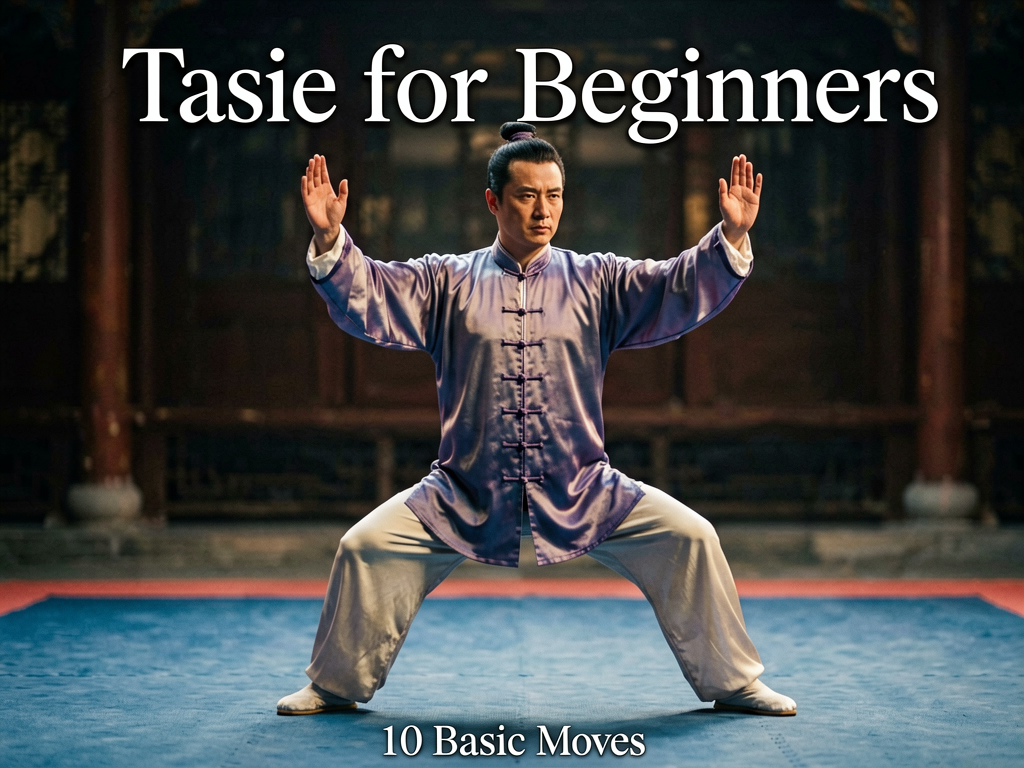
Tai Chi for Beginners: 10 Basic Moves to Get Started
Tai Chi for Beginners: 10 Basic Moves to Get Started
Tai Chi (太极拳, tàijíquán) looks slow and easy. Anyone who’s tried it knows different. Those “effortless” movements require balance, coordination, and a surprising amount of leg strength. But the payoff — better balance, reduced stress, improved mobility — is worth the effort.
Here are 10 fundamental moves to get you started. Practice each one slowly before trying to connect them.
1. Commencing Form (起势)
Stand with feet shoulder-width apart, arms hanging naturally. Raise your arms slowly to shoulder height, palms facing down. Then bend your knees slightly and press your palms down as if pushing water. This isn’t just a warm-up — it’s the foundation of all Tai Chi movement. The entire body moves as one unit, not in separate parts.
2. Part the Wild Horse’s Mane (野马分鬃)
Shift your weight to one leg and step forward with the other. Your front hand rises to chest height, palm up, while your back hand presses down near your hip. It looks like you’re parting tall grass to walk through it. This move teaches weight shifting — a skill most people lose as they age.
3. White Crane Spreads Its Wings (白鹤亮翅)
From a forward stance, shift your weight back. One hand rises above your head (the crane’s wing), the other presses down by your side. Balance on one leg, relaxed but stable. If you wobble, you’re doing it right — keep practicing.
4. Brush Knee and Push (搂膝拗步)
Step forward, circle one hand down past your knee, and push the other hand forward at chest height. It’s a defensive move — brush away an attack and counter. Focus on the coordination between hand and foot. They should arrive at the same time.
5. Play the Lute (手挥琵琶)
One hand moves forward like you’re holding a lute neck, the other cradles the body. The movements are small and precise. This move teaches containment — keeping your energy centered rather than scattered.
6. Repulse the Monkey (倒卷肱)
Step backward while pushing one hand forward and pulling the other back. It’s Tai Chi’s version of reverse gear. Most martial arts move forward; Tai Chi practices retreating with control. Useful in life too.
7. Grasp the Bird’s Tail (揽雀尾)
This is actually four movements in one: ward off, roll back, press, and push. It’s the most important sequence in Tai Chi — a complete cycle of defense and counterattack. Many teachers say if you learn only one thing, learn this.
8. Cloud Hands (云手)
Weight shifts side to side as your hands trace horizontal circles in front of your body, palms facing you like you’re moving clouds. This move is hypnotic once you get the rhythm right. It’s also excellent for shoulder mobility.
9. Kick with Heel (蹬脚)
Raise your knee, then extend your foot forward in a heel kick — controlled, not explosive. Hands press outward for balance. If you can do this without grabbing a wall, your balance is better than most beginners.
10. Closing Form (收势)
Bring your hands down slowly as you straighten your legs. Let your breath settle. Stand quietly for a moment before walking away. This is as important as the first move — Tai Chi is as much about the space between movements as the movements themselves.
Getting Started
Practice these 10 moves for 10 minutes a day. Focus on slow, even breathing — inhale as you rise or open, exhale as you sink or close. Don’t worry about getting every detail right. Tai Chi is called “meditation in motion” for a reason. The perfection comes from repetition, not from forcing it.
Find a teacher if you can. Videos help, but nothing replaces someone adjusting your posture. That said, these 10 moves will give you a solid foundation — and a real appreciation for how hard “slow and easy” can be.