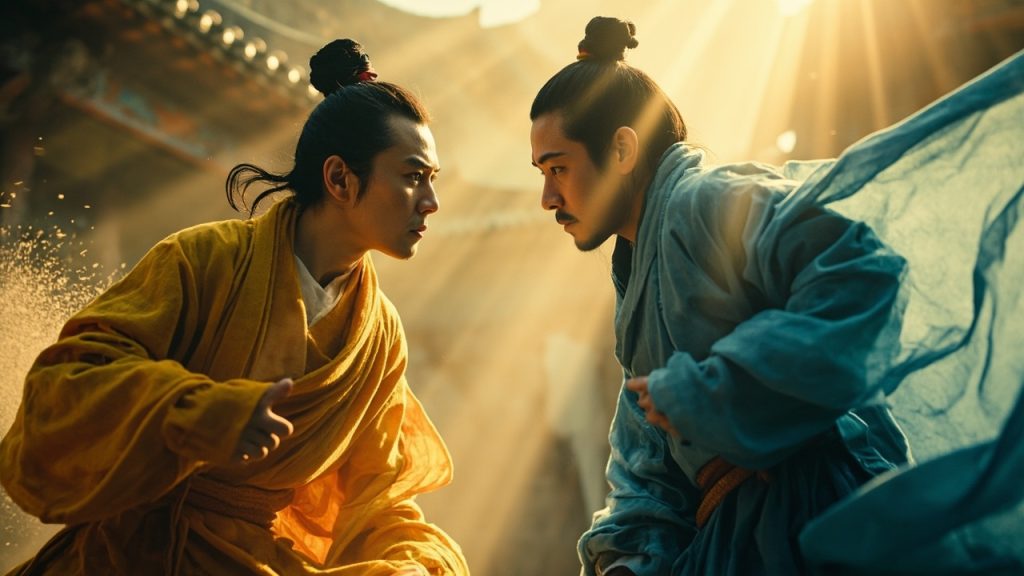
Shaolin vs Wudang: Two Schools of Kung Fu
Shaolin vs Wudang: Two Schools of Kung Fu
If you ask a Chinese person about kung fu schools, two names come up: Shaolin and Wudang. They’re the Yin and Yang of Chinese martial arts — one hard, one soft; one Buddhist, one Taoist; one famous worldwide, the other legendary to those who know.
Here’s how they compare.
Shaolin — The External Style
Shaolin kung fu comes from the Shaolin Temple in Henan province. It’s what most Westerners picture when they think of martial arts: powerful punches, explosive kicks, acrobatic moves. It emphasizes strength, speed, and endurance. Monks train until their bodies become weapons — conditioned fists, hardened forearms, iron-core balance.
The philosophy is Chan Buddhism mixed with combat practicality. Train the body to discipline the mind. Hit hard, hit fast, and don’t get hit back. There’s a reason Shaolin monks have a reputation as some of the most disciplined fighters on earth.
Wudang — The Internal Style
Wudang kung fu comes from the Wudang Mountains in Hubei province. It’s based on Taoist principles — flowing like water, yielding to overcome force, using the opponent’s energy against them. The movements are circular and graceful, almost dance-like. Tai Chi is the most famous Wudang-style practice, but it also includes forms like Baguazhang (eight trigrams palm) and Xingyiquan (form and intention fist).
The philosophy is Taoist: don’t fight force with force. Redirect. Deflect. Wait for the opponent to overcommit, then use their momentum to end the fight. Wudang practitioners train the internal energy (qi, 气) as much as the physical body.
Key Differences at a Glance
Training: Shaolin is grueling physical conditioning — hours of stance training, kicks, punches, and sparring. Wudang is slower, focusing on form precision, breath control, and meditation. Both are hard, just in different ways.
Fighting philosophy: Shaolin believes the best defense is a strong offense. Wudang believes the best defense is not being there when the attack lands.
Appearance: Shaolin looks powerful and aggressive — low stances, fast combinations, explosive jumps. Wudang looks graceful and effortless — flowing robes, slow circles, sudden bursts of speed.
Which One Should You Learn?
Pick Shaolin if you want to get in serious shape, learn practical self-defense, and don’t mind sore muscles. Shaolin training will transform your body in six months.
Pick Wudang if you’re interested in the meditative aspects, want something sustainable as you get older, or prefer technique over brute force. Many Wudang practitioners start in their 40s and 50s.
Or do what many Chinese practitioners do: start with Shaolin to build a foundation, then switch to Wudang later. External first, then internal. The hard prepares you for the soft.
A Note on Authenticity
Both schools have been heavily commercialized. Real Shaolin training takes years of monastic discipline — weekend classes at a shopping mall won’t cut it. Wudang has the same problem: there are more “Wudang masters” teaching tourists than actual monks. If you’re serious, go to the source: the Shaolin Temple in Dengfeng or the Wudang Mountains in Shiyan. Train where the monks train.