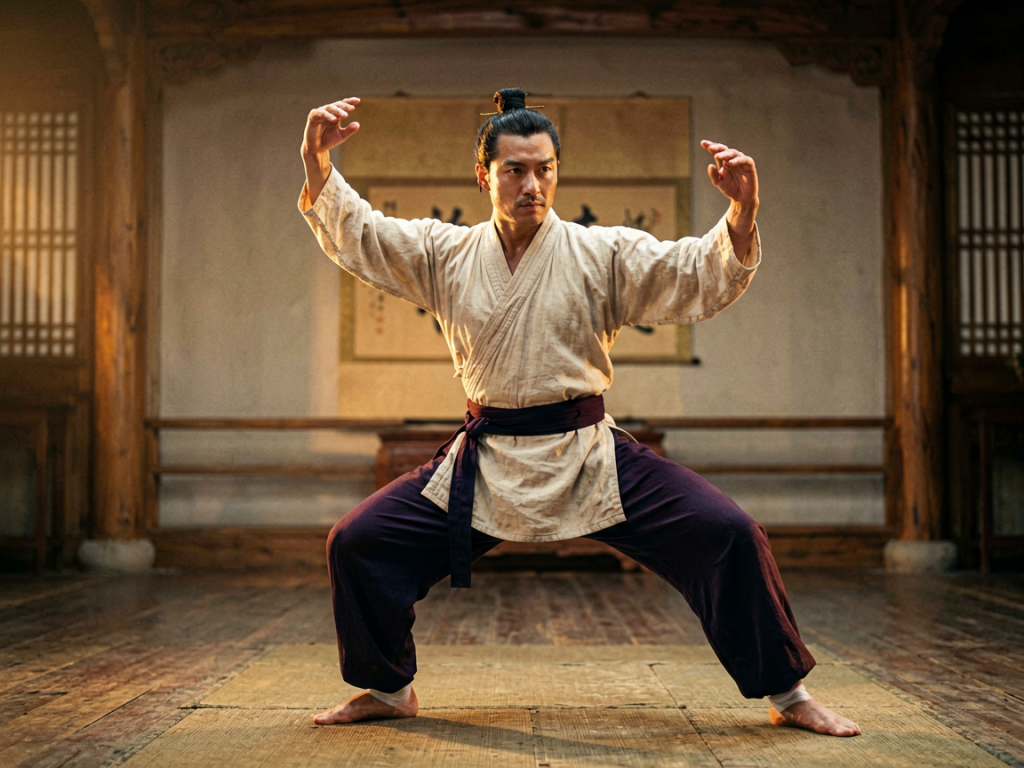
Drunken Fist: Kung Fu’s Most Misunderstood Style
Drunken Fist (醉拳, zuì quán) looks like a drunk person fighting — staggering, stumbling, swaying. It’s not. Every “accidental” movement is a deliberate technique designed to confuse opponents and attack from unexpected angles.
The style mimics a drunkard’s movements to disguise martial intent. The swaying makes it hard for opponents to predict attacks. The stumbling creates sudden changes in level. The off-balance appearance is deceptive — the practitioner has complete control and can explode into action at any moment.
Drunken Fist has eight main forms, each named after a famous “drunken immortal” from Chinese mythology. Each immortal has a characteristic posture (limping, leaning, hopping) that the practitioner adapts into fighting techniques. The style requires excellent balance and conditioning — the “drunken” movements put unusual stress on joints and tendons.
Jackie Chan popularized Drunken Fist in his 1978 film “Drunken Master” — still one of the greatest kung fu comedies ever made. The fight choreography in that film is a masterclass in combining humor with genuine martial skill.