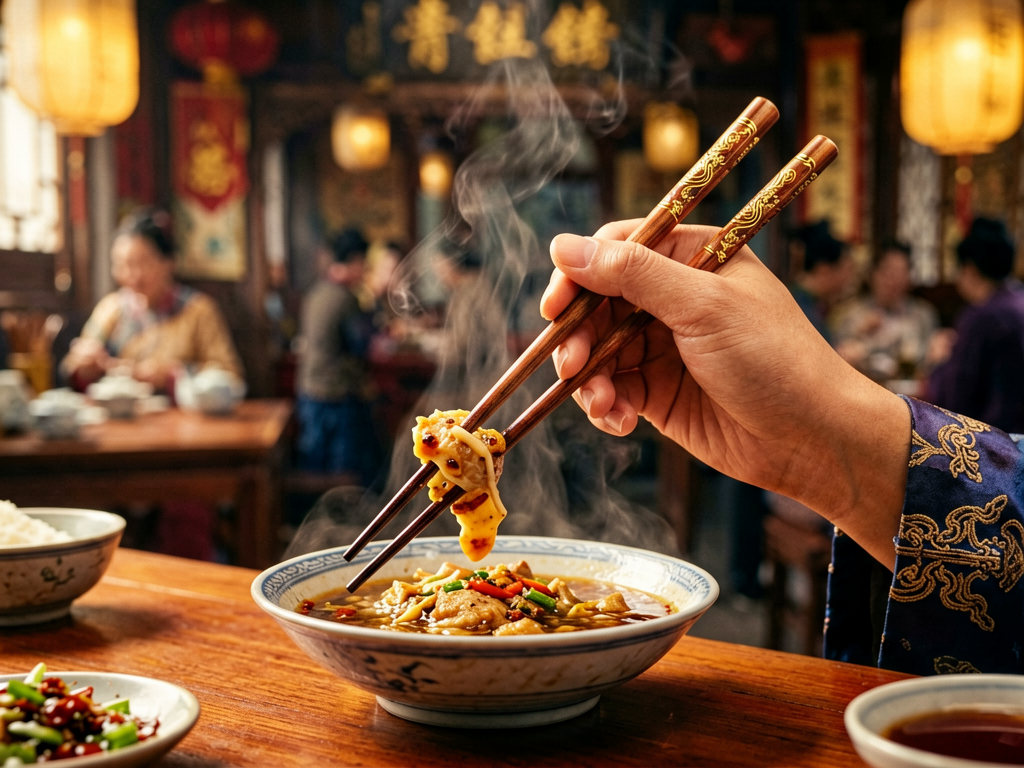
How Chopsticks Became China’s Ultimate Eating Tool
Here’s the thing: Fun fact: chopsticks weren’t always China’s primary eating utensil. Before chopsticks, people ate with their hands. And before that, they used knives and spoons — like most other cultures. I absolutely love this.
So how did two thin sticks become the default for over a billion people? Honestly incredible.
The Chopstick Revolution
Chopsticks started appearing around 1200 BC during the Shang dynasty, but they weren’t used for eating. They were cooking tools — long enough to reach into boiling water or oil without burning your hand.
In my experience, this makes all the difference.
In my experience, this makes all the difference.
The shift to eating with chopsticks happened gradually, driven by two things. First, Confucius advised against bringing knives to the table — he believed they evoked violence and warfare, which had no place at a peaceful meal. Second, the rising popularity of stir-frying meant food was already cut into small pieces in the wok, making chopsticks the most practical tool to pick them up.
This is where it gets interesting.
This is where it gets interesting.
By the Han dynasty (206 BC — 220 AD), chopsticks had become standard eating utensils across China.
Regional Differences
Chinese chopsticks are longer and thicker than Japanese or Korean ones. They’re usually made of bamboo, wood, or plastic — rarely metal (unlike Korea, where metal chopsticks are standard). The blunt, square tips are designed for gripping food securely, not for the precision work of Japanese chopsticks.
The material matters more than you’d think. Bamboo and wood provide grip, making it easier to pick up slippery noodles or tofu. That’s why even fancy Chinese restaurants rarely use metal chopsticks — they’re just too smooth.
Etiquette You Should Know
A few rules to avoid embarrassing yourself:
Consider “Guanxi” — it’s everywhere.
Don’t stick chopsticks vertically into a bowl of rice — it resembles incense sticks used at funerals and is considered bad luck. Don’t point at people with chopsticks. Don’t use them to skewer food like a spear (that’s what forks are for). When taking food from a shared dish, use the serving chopsticks if provided, or the opposite end of your own.
And here’s one most tourists miss: in China, it’s actually polite to pick up your rice bowl and bring it to your mouth, rather than leaning down to the bowl. You’ll see everyone doing it.
Why They Survived
Chopsticks have lasted thousands of years because they work perfectly for Chinese cooking. Food is chopped into bite-sized pieces in the kitchen, cooked quickly at high heat, and served immediately. You don’t need a knife at the table — the cutting already happened. You don’t need a spoon — chopsticks can handle rice, noodles, and vegetables. They’re simple, cheap, and effective.
Sometimes the oldest tools are the best ones.
In my opinion, it’s the best option.